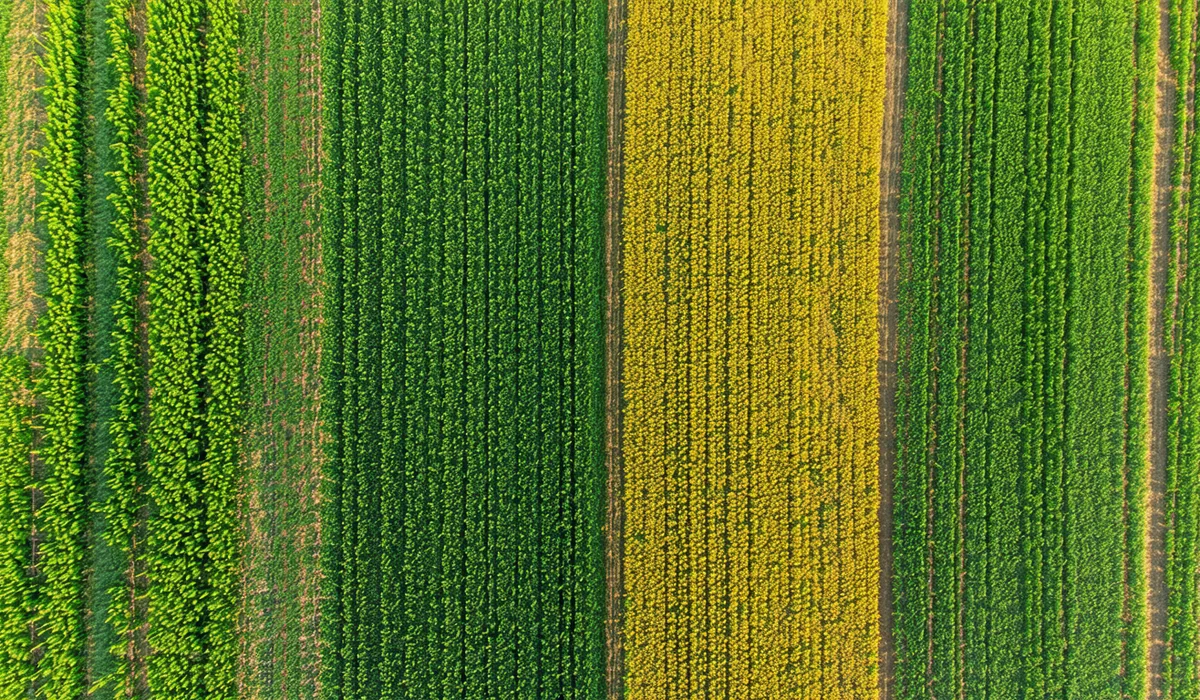
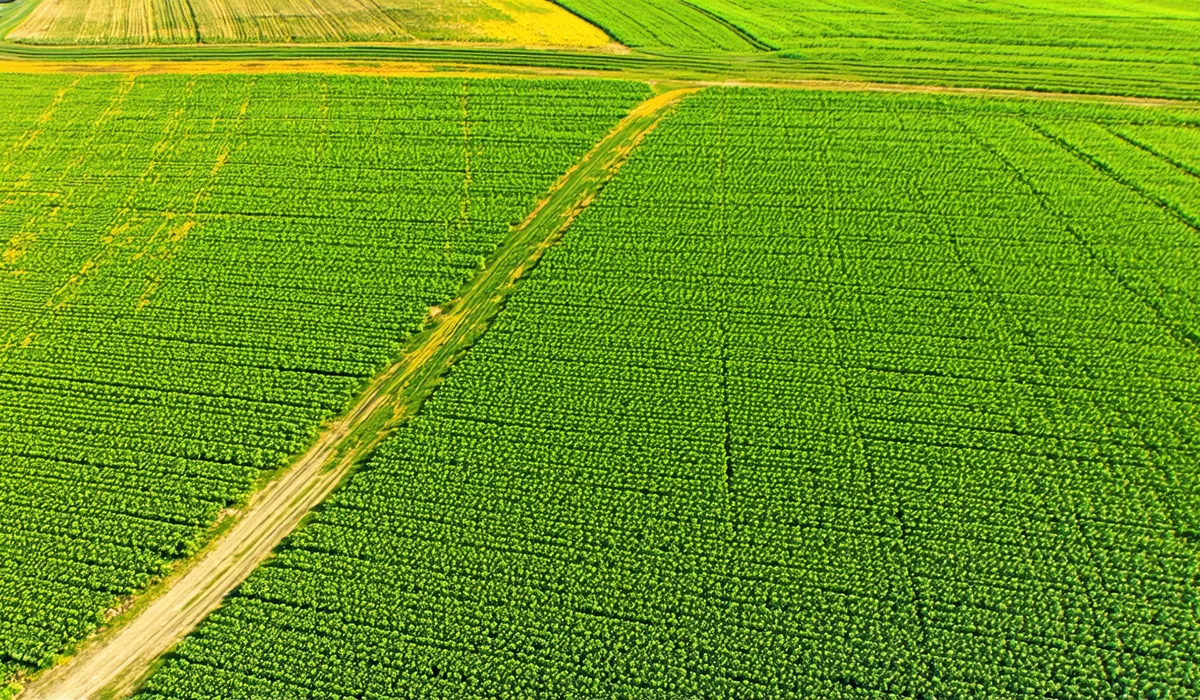
Satellite false-color aerial view of US agricultural field grid showing NDVI contrast between crops
Geospatial Intelligence

Ground truth, not county averages.

Terraxiq turns 10-meter multispectral satellite imagery into field-level yield estimates updated every 5 days. Crop insurers use it to price MPH policies at APN level. Commodity traders use it to front-run WASDE by six weeks.

5-day update cadence
10m resolution imagery
185M acres monitored
Corn · Soy · Wheat

Trusted by

CROP INSURANCE Regional Crop Insurer 4 US states · MPH and named-peril
COMMODITY TRADING Commodity Trading Desk Soft commodities · Corn, Soy, Wheat
REINSURANCE Agricultural Reinsurer Treaty pricing · CONUS portfolio
The Problem

County averages are 30 years old. Fields aren't.

USDA RMA county loss-cost factors are multi-decade averages built from voluntary hand surveys aggregated across thousands of farms. A drought in one township while the adjacent township gets adequate precipitation still registers as one county-level number — erasing the within-county variance where adversely selected risk actually concentrates.

Commodity traders face the same structural gap. USDA WASDE publishes once a month. Intra-season crop development — stress events, recovery signals, yield trajectory shifts — happens on a 5-day satellite cadence. The 30 days between WASDE publications are a structural information asymmetry.

"Up to 34% yield variation within single RMA county units — USDA NASS county-level analysis"
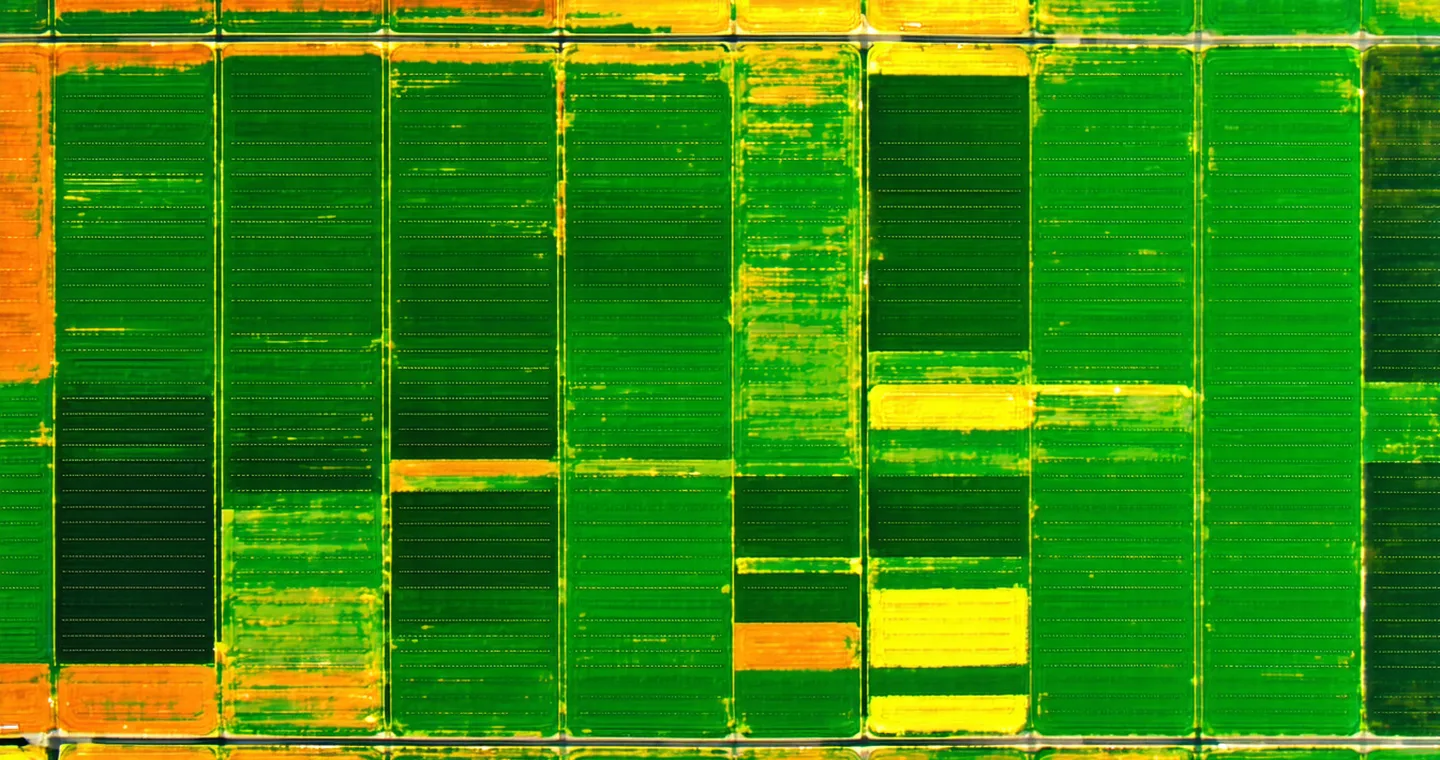
County-level (USDA RMA)
Field-level (Terraxiq)
How It Works

The Terraxiq Intelligence Pipeline

10-Meter Multispectral Imagery

10-band capture — VIS, NIR, red-edge, and SWIR — at 10-meter GSD from two satellite constellations. Cloud gaps filled via weighted temporal compositing, maintaining clean NDVI signal through cloudy Midwest growing seasons.

Field-Level Yield Models

Gradient-boosted models ingesting NDVI time-series, growing-degree days, and soil moisture indices. Calibrated on 8 years of USDA NASS county harvest data. Output: P10/P50/P90 distributions per field polygon, updated every 5 days from emergence to maturity.

REST API Delivery

GeoJSON field polygons, NDVI time-series arrays, and yield probability distributions delivered via REST endpoint. JSON schema designed for direct ingestion into actuarial rating engines and quant trading systems — no GIS toolchain required.

Two Buyer Segments

Built for Two Buyers

Aerial view of US corn belt patchwork fields from satellite perspective
Crop Insurance

Price risk on what's actually growing

Replace RMA county loss-cost factors with field-polygon yield distributions at APN level. Price MPH and named-peril policies on what's actually in the ground this season, not a multi-decade average across 500,000 acres.

Explore for Insurers
Satellite swath over Iowa Illinois corn belt showing dense agricultural grid
Commodity Trading

See the harvest before the market does

P10/P50/P90 yield distributions for corn, soybean, and wheat across CONUS producing regions, updated every 5 days. The USDA WASDE publishes monthly. Terraxiq delivers the intra-season trajectory 6 weeks before each WASDE print.

Explore for Traders
Coverage at Harvest Scale

Coverage at harvest scale

185M acres

US cropland monitored

5-day  

Update cadence

10m resolution

Field-level imagery

3 crops

Corn · Soy · Wheat

We replaced our county-average loss cost factors with Terraxiq field polygon estimates in one growing season. The within-county basis risk we'd been absorbing for years showed up immediately in the residuals.

Head of Underwriting Analytics · Regional Crop Insurer · 4 US states

Ready to price risk on what's actually growing?

Underwriting teams use Terraxiq to close the gap between RMA county tables and field-level loss exposure. Trading desks use it to move before WASDE. Both run on the same API.